

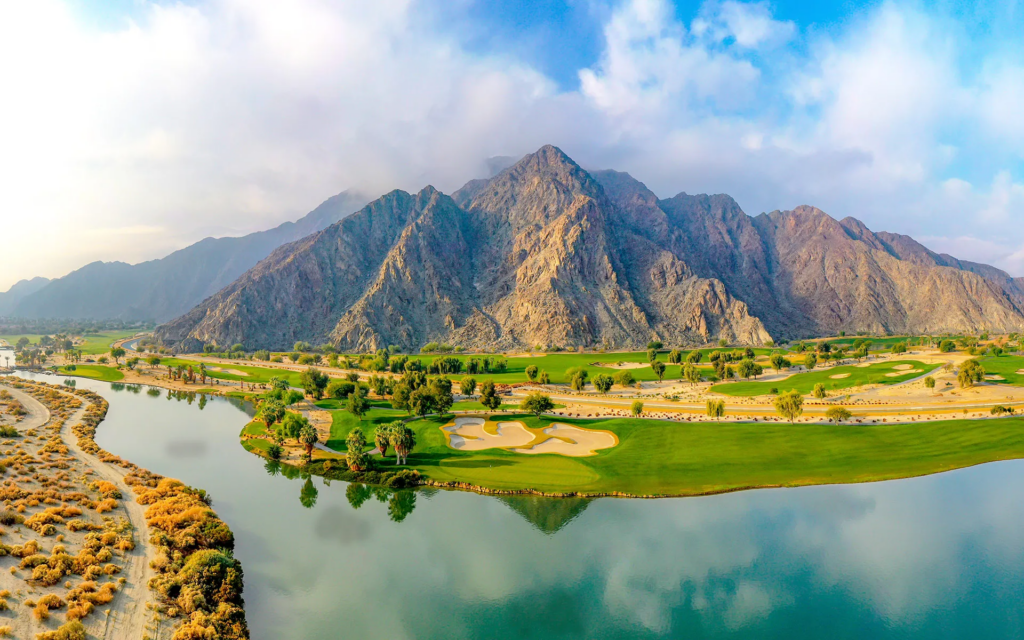
SilverRock Resort positions itself for the next era of golf and recreation
Fresh bermudagrass and course-wide turf renovation elevate play and reputation
By Alison Elsner
A course-wide turf renewal has powerfully proclaimed SilverRock’s standing among the Coachella Valley’s most compelling golf and lifestyle destinations.
SilverRock is entering one of the most exciting chapters in its two-decade history. An interview with Randy Duncan, general manager and director of golf at SilverRock Resort since 2004, reveals that the golf club has continued to evolve as one of La Quinta’s premier public golf destinations, with a renewed focus on course conditions, playability and the overall experience for golfers and visitors.
Duncan says, “We are elated that the City of La Quinta has completed a fresh, course-wide turf upgrade designed to elevate playability, durability and visual appeal.”
At the heart of that momentum is the playing surface. The two-summer renovation replaced aging turf with a new premium bermudagrass, selected for better playability, stronger growth habits and its ability to withstand desert heat, drought, traffic and the stresses of overseeding. The front nine was renewed first, followed by the back nine in summer 2026. Crews also laser-leveled tee boxes, refined bunker access and transition areas, and restored fairway contours closer to the original Arnold Palmer design. The result is a cleaner, firmer and more consistent encounter from tee to green.
Duncan says, “I’d put this course up against any course in the desert, and what’s impressive is that we did most of it in house. Our superintendent, Chris Hoyer, is so talented in terms of agronomy knowledge, leading teams, contractors, and maintenance crews. It makes us all really proud.”
The staff at SilverRock is known for its friendly, welcoming demeanor and commitment to making every guest feel at home. James Saenz, head golf professional, leads the golf operations and has been with Duncan since day one, also dating back to 2004.
Duncan said, “From the moment you arrive at SilverRock, you’ll be treated with genuine kindness and hospitality. The staff takes pride in creating an experience where every golfer feels more like a member than a guest.”
Owned by the City of La Quinta and managed by Landmark Golf Management, SilverRock’s Arnold Palmer Classic Course stretches 7,239 yards across more than 200 acres beneath the Santa Rosa Mountains. Massive native bunkers, dramatic water features, rocky outcroppings and strategic angles give it the scale and character of a prestige venue. Its reputation is equally substantial: SilverRock served as a PGA Tour tournament course from 2008 through 2011, proving that a municipal course can meet professional scrutiny while remaining accessible to residents and visitors.
Winners saw defending champion Charley Hoffman showcase his defense in 2008 during the tournament, ultimately won by D.J. Trahan. The overall tournament winners were Pat Perez in 2009 and Bill Haas in 2010. In 2011, SilverRock saw the rise of Jhonattan Vegas, then a 26-year-old PGA Tour rookie from Venezuela, who eventually defeated Gary Woodland in a playoff.
SilverRock’s public status should never be mistaken for a compromise in quality. The routing asks players to think from the tee, manage bold bunkering and choose smart approaches into the greens. Multiple tees welcome a range of abilities, while the back markers preserve a formidable championship test.
Duncan says, “The new bermudagrass fairways deliver cleaner lies, better recovery and a polished presentation, which means that SilverRock can stand confidently beside the Coachella Valley’s respected private clubs in both course quality and reputation—without the membership barrier.”
He continues, “The upgrades have taken SilverRock from an excellent round of golf to a first-class recreational outing. SilverRock was already playing in the big leagues; the upgrades simply gave it an even sharper uniform and a state-of-the-art playing field.”
The benefits extend beyond aesthetics. The new p turf on the greens reduces the need for traditional overseeding of the putting surfaces, shortening the annual fall closure from roughly four weeks to about two and a half.
Accessibility remains central to SilverRock’s identity. At least one-third of tee times are reserved for La Quinta resident cardholders. Non-residents can book through dynamic pricing, broadening access to a level of design and conditioning often associated with a private or high-end resort golf. During the valley’s busiest months, demand is strong enough that tee sheets routinely approach capacity.
SilverRock also extends its value beyond the standard round. “Walk the Rock,” a long-running program for La Quinta residents, offers late-afternoon walking play on a nine-hole loop that begins on No. 2 and finishes near the clubhouse. Without carts and timed near sunset, it blends golf, fitness and the joy of immersing oneself in the desert landscape.
SilverRock Grill, housed in the historic Ahmanson Ranch House, is open for breakfast and lunch. Led by Chef Jose Bravo and a very friendly staff, the top-rated restaurant attracts golfers and non-golfers alike with indoor and patio seating, mountain views and a pup-friendly atmosphere.
In December, the property becomes a central stage for Ironman 70.3 La Quinta, with SilverRock Park hosting race-week activities and the bike-to-run transition and finish area, to include a swim in stunning Lake Cahuilla, a scenic desert bike course, and a run through the picturesque Coachella Valley landscape. For a few days, a golf landscape transforms into a sought-after gathering place for athletes, spectators and families.
For golfers, the headline remains the course itself: a top-quality course, reinvigorated from tee to green and framed by one of the valley’s most dramatic mountain settings. For La Quinta residents, it is also a public investment in access, wellness and quality of life.
As GM Duncan reminds us, for a golf resort that is public in ownership yet characterized by private-club caliber in ambition and holds its own and then some.
SilverRock Resort
79179 Ahmanson Lane, La Quinta, 760.777.8884, silverrock.org
Instagram: @silverrockresort